有智慧的行為,往往不只是對眼前的輸入做出反應。它需要前瞻:把複雜任務拆成更小、可掌控的步驟,並為達成目標擬定策略。這就是 Planning(規劃)模式的用武之地。規劃的核心,是 Agent(或一組 Agent)制定一連串行動、從初始狀態走向目標狀態的能力。
模式概觀
在 AI 的脈絡下,可以把規劃型 Agent 想成一位你委以複雜目標的專家。當你請它「籌辦一場團隊異地會議」時,你定義的是「做什麼」──目標和它的限制條件──而不是「怎麼做」。Agent 的核心任務,是自主地規劃出通往目標的路線。它得先理解初始狀態(例如預算、人數、期望日期)和目標狀態(順利訂好的異地會議),再找出連接兩者的最佳行動序列。計畫不是事先就有的,而是針對請求即時產生的。
這個過程的標誌是適應力。初始計畫只是起點,不是死板的腳本。Agent 真正的威力在於它能吸收新資訊、繞過障礙繼續推進。比方說,首選場地訂不到了、選定的外燴商滿檔了,一個有能力的 Agent 不會就此失敗,而是會調整:記下新的限制條件、重新評估選項、擬出新計畫──也許是建議替代場地或日期。
不過,必須認清「靈活性」和「可預測性」之間的取捨。動態規劃是特定用途的工具,不是萬用解。當問題的解法已經很清楚、可以重複套用時,把 Agent 限制在預先定義的固定工作流程反而更有效:限縮 Agent 的自主性,可以降低不確定性和不可預測行為的風險,保證結果可靠且一致。所以「用規劃型 Agent 還是簡單的任務執行 Agent」,取決於一個問題:「怎麼做」需要被發現,還是已經知道了?
實際應用與使用情境
Planning 模式是自主系統的核心計算過程,讓 Agent 能為指定目標合成出一連串行動,特別是在動態或複雜的環境中。這個過程把高層次的目標,轉化為由分立、可執行步驟組成的結構化計畫。
在程序性任務自動化這類領域,規劃用來調度複雜的工作流程。例如「新員工入職」這樣的業務流程,可以分解成一連串有方向的子任務:建立系統帳號、指派訓練課程、與各部門協調。Agent 生成一個按邏輯順序執行這些步驟的計畫,呼叫必要的工具、與各系統互動來處理依賴關係。
在機器人與自主導航領域,規劃是狀態空間遍歷的基礎。不管是實體機器人還是虛擬實體,系統都必須生成一條路徑或一串行動,從初始狀態轉移到目標狀態。這牽涉到對時間、能耗等指標的最佳化,同時遵守環境限制,例如避開障礙物或遵守交通規則。
這個模式對結構化的資訊綜合也很關鍵。接到「生成一份研究報告」這類複雜產出的任務時,Agent 可以擬定一個包含明確階段的計畫:蒐集資訊、摘要資料、組織內容、迭代修訂。同樣地,在需要多步驟解決問題的客服場景,Agent 可以建立並遵循一套系統化的計畫:診斷、實施解法、必要時升級。
本質上,Planning 模式讓 Agent 超越簡單的反應式行動,走向目標導向的行為。它提供了解決「需要一連串環環相扣的操作」的問題所必需的邏輯框架。
實作範例(CrewAI)
接下來示範用 CrewAI 框架實作 Planner 模式:Agent 先為複雜的查詢擬定一個多步驟計畫,再依序執行。
import os
from dotenv import load_dotenv
from crewai import Agent, Task, Crew, Process
from langchain_openai import ChatOpenAI


# Load environment variables from .env file for security
load_dotenv()


# 1. Explicitly define the language model for clarity
llm = ChatOpenAI(model="gpt-4-turbo")


# 2. Define a clear and focused agent
planner_writer_agent = Agent(
    role='Article Planner and Writer',
    goal='Plan and then write a concise, engaging summary on a specified topic.',
    backstory=(
        'You are an expert technical writer and content strategist. '
        'Your strength lies in creating a clear, actionable plan before writing, '
        'ensuring the final summary is both informative and easy to digest.'
    ),
    verbose=True,
    allow_delegation=False,
    llm=llm,  # Assign the specific LLM to the agent
)


# 3. Define a task with a more structured and specific expected output
topic = "The importance of Reinforcement Learning in AI"

high_level_task = Task(
    description=(
        f"1. Create a bullet-point plan for a summary on the topic: '{topic}'.\n"
        f"2. Write the summary based on your plan, keeping it around 200 words."
    ),
    expected_output=(
        "A final report containing two distinct sections:\n\n"
        "### Plan\n"
        "- A bulleted list outlining the main points of the summary.\n\n"
        "### Summary\n"
        "- A concise and well-structured summary of the topic."
    ),
    agent=planner_writer_agent,
)


# Create the crew with a clear process
crew = Crew(
    agents=[planner_writer_agent],
    tasks=[high_level_task],
    process=Process.sequential,
)


# Execute the task
print("## Running the planning and writing task ##")
result = crew.kickoff()

print("\n\n---\n## Task Result ##\n---")
print(result)
這段程式碼用 CrewAI 函式庫建立一個「先規劃、再撰寫指定主題摘要」的 AI Agent。它先匯入必要的函式庫(包括 CrewAI 和 langchain_openai),並從 .env 檔載入環境變數。程式明確定義了一個 ChatOpenAI 語言模型給 Agent 使用。接著建立名為 planner_writer_agent 的 Agent,賦予明確的角色和目標:先規劃、再寫出簡潔的摘要;它的 backstory 強調規劃與技術寫作的專長。然後定義一個 Task,清楚描述要先擬計畫、再就主題「The importance of Reinforcement Learning in AI」寫摘要,並指定了預期輸出的格式。最後把 Agent 和任務組成一個 Crew,設定為循序處理,呼叫 crew.kickoff() 執行任務並印出結果。
Google DeepResearch
Google Gemini DeepResearch(見圖 1)是一個為自主資訊檢索與綜合而設計的 Agent 系統。它透過一條多步驟的 Agentic pipeline 運作,動態、迭代地查詢 Google 搜尋,有系統地探索複雜主題。這個系統的設計目標是:處理大量網路來源、評估蒐集到的資料的相關性和知識缺口,再進行後續搜尋來填補缺口。最終輸出把驗證過的資訊整合成一份結構化的多頁摘要,並附上原始來源的引用。
進一步說,這個系統的運作不是一次性的「問答」,而是一個受管理的長時間流程。它先把使用者的 Prompt 拆解成一份多要點的研究計畫(見圖 1),呈給使用者審閱和修改──在執行之前,研究方向可以協作式地調整。計畫核准後,Agentic pipeline 就啟動迭代的「搜尋與分析」循環。這不只是執行一串預先定義的搜尋:Agent 會根據蒐集到的資訊動態地擬定和調整查詢,主動找出知識缺口、交叉驗證資料點、解決不一致之處。
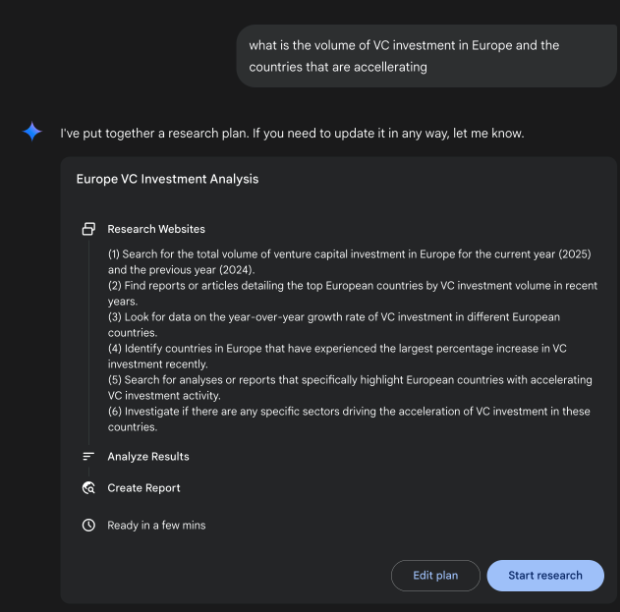
圖 1:Google Deep Research Agent 為「以 Google 搜尋為工具」生成執行計畫。
一個關鍵的架構元件,是系統以非同步方式管理整個流程的能力。這個設計確保這場可能要分析上百個來源的調查,能承受單點故障,也讓使用者可以先離開、完成後再收到通知。系統還能整合使用者提供的文件,把私有來源的資訊和網路研究結合起來。最終輸出不只是把發現串在一起的清單,而是一份結構化的多頁報告。在綜合階段,模型會對蒐集到的資訊做批判性的評估:找出主要議題,把內容組織成有邏輯段落的連貫敘事。報告設計成可互動的,通常包含語音導覽、圖表、原始引用來源的連結等功能,方便使用者驗證和進一步探索。除了綜合結果之外,模型還會明確列出它搜尋和參考過的完整來源清單(見圖 2),以引用的形式呈現,提供完全的透明度和直達原始資訊的路徑。整個過程把一個簡單的查詢,轉化成一套全面、綜合過的知識。
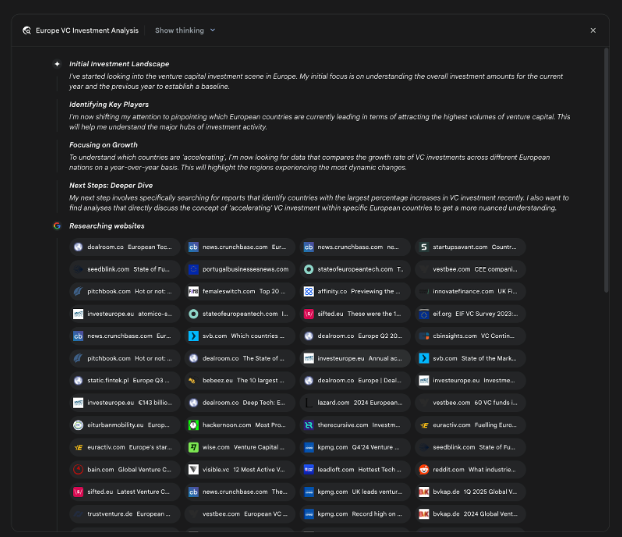
圖 2:Deep Research 計畫執行中的例子──Google 搜尋作為工具,搜尋各種網路來源。
Gemini DeepResearch 省去了手動蒐集和綜合資料所需的大量時間與資源,為資訊探索提供了更有結構、更詳盡的方法。在各領域複雜、多面向的研究任務中,這個系統的價值特別明顯。
例如在競爭分析中,可以指示 Agent 有系統地蒐集和整理市場趨勢、競品規格、來自各種網路來源的輿論,以及行銷策略。這個自動化流程取代了手動追蹤多個競爭對手的苦工,讓分析師能專注在更高層次的策略解讀,而不是資料蒐集(見圖 3)。
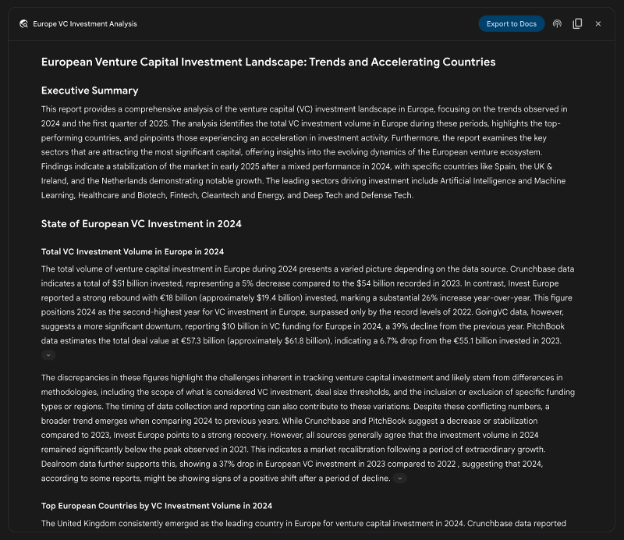
圖 3:Google Deep Research Agent 生成的最終輸出,代替我們分析以 Google 搜尋為工具取得的來源。
同樣地,在學術探索中,這個系統是進行大規模文獻回顧的利器:它能找出並摘要奠基性的論文、跨大量文獻追蹤概念的發展脈絡、描繪特定領域新興的研究前沿,大幅加速學術研究中最初也最耗時的階段。
這種做法的效率,來自把「迭代搜尋與過濾」這個手動研究的核心瓶頸自動化。全面性則來自系統能在相近的時間內,處理比人類研究者多得多、雜得多的資訊來源。更廣的分析範圍有助於降低選擇偏誤,也更有機會挖出不那麼顯眼、但可能很關鍵的資訊,讓你對主題的理解更穩固、更有依據。
OpenAI Deep Research API
OpenAI Deep Research API 是專門把複雜研究任務自動化的工具。它使用一個先進的 Agentic 模型,能獨立地推理、規劃,並從真實世界的來源綜合資訊。與簡單的問答模型不同,它接收一個高層次的查詢,自主地把它拆成子問題、用內建工具做網頁搜尋,最後交出一份結構化、引用豐富的報告。這個 API 讓你以程式化的方式直接使用整個流程;在撰寫本文時,可用的模型包括高品質綜合的 o3-deep-research-2025-06-26,以及速度較快、適合延遲敏感應用的 o4-mini-deep-research-2025-06-26。
Deep Research API 的價值在於:它把原本要花上數小時的手動研究自動化,交出專業等級、以資料為本的報告,適合用來支撐商業策略、投資決策或政策建議。主要好處包括:
- 結構化、有引用的輸出: 產出組織良好的報告,行內引用連結到來源的中繼資料,確保論點可驗證、有資料支撐。
- 透明度: 不同於 ChatGPT 裡被抽象掉的過程,API 揭露所有中間步驟,包括 Agent 的推理、實際執行的搜尋查詢、跑過的程式碼。這讓你能細緻地除錯、分析,更深入理解最終答案是怎麼組出來的。
- 可擴充性: 支援 Model Context Protocol(MCP),開發者能把 Agent 接上私有知識庫和內部資料來源,讓公開的網路研究與專屬資訊結合。
使用 API 時,向 client.responses.create 端點發送請求,指定模型、輸入 Prompt,以及 Agent 可用的工具。輸入通常包含定義 Agent 人設和期望輸出格式的 system_message,加上 user_query。你必須帶上 web_search_preview 工具,也可以選擇加上 code_interpreter,或用於內部資料的自訂 MCP 工具(見第 10 章)。
from openai import OpenAI


# Initialize the client with your API key
client = OpenAI(api_key="YOUR_OPENAI_API_KEY")


# Define the agent's role and the user's research question
system_message = """
You are a professional researcher preparing a structured, data-driven report.
Focus on data-rich insights, use reliable sources, and include inline citations.
"""

user_query = "Research the economic impact of semaglutide on global healthcare systems."


# Create the Deep Research API call
response = client.responses.create(
    model="o3-deep-research-2025-06-26",
    input=[
        {
            "role": "developer",
            "content": [{"type": "input_text", "text": system_message}],
        },
        {
            "role": "user",
            "content": [{"type": "input_text", "text": user_query}],
        },
    ],
    reasoning={"summary": "auto"},
    tools=[{"type": "web_search_preview"}],
)


# Access and print the final report from the response
final_report = response.output[-1].content[0].text
print(final_report)


# --- ACCESS INLINE CITATIONS AND METADATA ---
print("--- CITATIONS ---")
annotations = response.output[-1].content[0].annotations

if not annotations:
    print("No annotations found in the report.")
else:
    for i, citation in enumerate(annotations):
        # The text span the citation refers to
        cited_text = final_report[citation.start_index : citation.end_index]
        print(f"Citation {i + 1}:")
        print(f"  Cited Text: {cited_text}")
        print(f"  Title: {citation.title}")
        print(f"  URL: {citation.url}")
        print(f"  Location: chars {citation.start_index}–{citation.end_index}")

print("\n" + "=" * 50 + "\n")


# --- INSPECT INTERMEDIATE STEPS ---
print("--- INTERMEDIATE STEPS ---")

# 1. Reasoning Steps: Internal plans and summaries generated by the model.
try:
    reasoning_step = next(item for item in response.output if item.type == "reasoning")
    print("\n[Found a Reasoning Step]")
    for summary_part in reasoning_step.summary:
        print(f"  - {summary_part.text}")
except StopIteration:
    print("\nNo reasoning steps found.")

# 2. Web Search Calls: The exact search queries the agent executed.
try:
    search_step = next(item for item in response.output if item.type == "web_search_call")
    print("\n[Found a Web Search Call]")
    print(f"  Query Executed: '{search_step.action['query']}'")
    print(f"  Status: {search_step.status}")
except StopIteration:
    print("\nNo web search steps found.")

# 3. Code Execution: Any code run by the agent using the code interpreter.
try:
    code_step = next(item for item in response.output if item.type == "code_interpreter_call")
    print("\n[Found a Code Execution Step]")
    print("  Code Input:")
    print(f"  ```python\n{code_step.input}\n  ```")
    print("  Code Output:")
    print(f"  {code_step.output}")
except StopIteration:
    print("\nNo code execution steps found.")
這段程式碼用 OpenAI API 執行一次「Deep Research」任務。它先用你的 API key 初始化 OpenAI 客戶端(驗證的關鍵),接著把 AI Agent 的角色定義為專業研究員,並設定使用者的研究問題──semaglutide 對全球醫療體系的經濟影響。程式對 o3-deep-research-2025-06-26 模型發出 API 呼叫,把定義好的系統訊息和使用者查詢作為輸入,同時要求自動生成推理摘要、啟用網頁搜尋能力。呼叫完成後,抽出並印出最終生成的報告。
接著,程式嘗試從報告的 annotations 中取得行內引用和中繼資料,包括被引用的文字、標題、URL,以及在報告中的位置。最後,它檢視並印出模型執行過的中間步驟:推理步驟、網頁搜尋呼叫(包括實際執行的查詢),以及若有使用 code interpreter 時的程式碼執行步驟。
速覽
問題: 複雜的問題往往無法靠單一動作解決,需要前瞻性才能達成想要的結果。缺少結構化做法的 Agentic 系統,很難應付包含多個步驟和依賴關係的多面向請求,也就難以把高層次的目標拆成一串可掌控、可執行的小任務。結果就是系統無法有效地擬定策略,面對複雜目標時交出不完整或錯誤的結果。
解法: Planning 模式的標準化解法,是讓 Agentic 系統先為目標建立一份連貫的計畫:把高層次的目標分解成一連串更小、可執行的步驟或子目標。系統因此能管理複雜的工作流程、調度各種工具、按邏輯順序處理依賴關係。LLM 特別適合這件事,因為它們能基於龐大的訓練資料生成合理且有效的計畫。這種結構化做法把單純的反應式 Agent,轉變成能主動朝複雜目標推進、必要時還能調整計畫的策略執行者。
經驗法則: 當使用者的請求複雜到單一動作或工具處理不了時,就用這個模式。它最適合多步驟流程的自動化,例如生成詳細的研究報告、辦理新員工入職、執行競爭分析。只要任務需要一連串相互依賴的操作才能得到最終的綜合結果,就套用 Planning 模式。
圖解:
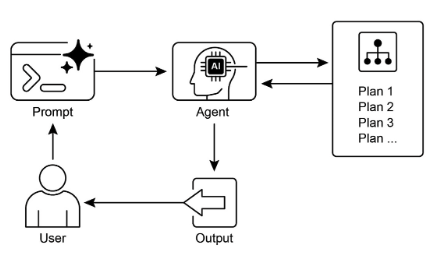
圖 4:Planning 設計模式。
重點回顧
- Planning 讓 Agent 能把複雜目標拆解成可執行的循序步驟。
- 它是處理多步驟任務、工作流程自動化、穿越複雜環境的必備能力。
- LLM 能根據任務描述生成一步一步的做法,執行規劃。
- 在 Agent 框架中,明確地用 Prompt 要求規劃步驟、或把任務設計成需要規劃,能引導出這種行為。
- Google Deep Research 是一個代替我們分析「以 Google 搜尋為工具取得的來源」的 Agent。它會反思、規劃、執行。
結語
總結來說,Planning 模式是讓 Agentic 系統從「簡單的反應式回應者」升級為「有策略、目標導向的執行者」的基礎元件。現代大型語言模型提供了這件事的核心能力:自主地把高層次目標分解成連貫、可執行的步驟。這個模式的適用範圍很廣:從直接的循序任務執行(像 CrewAI Agent 先擬寫作計畫再照著寫),到更複雜、更動態的系統。Google DeepResearch Agent 就是進階應用的例子:它建立迭代式的研究計畫,隨著持續蒐集的資訊調整和演化。歸根結柢,規劃是連接「人類意圖」和「複雜問題的自動化執行」之間的重要橋梁。透過把解題方法結構化,這個模式讓 Agent 能管理繁複的工作流程,交出全面、綜合過的結果。
參考資料
- Google DeepResearch (Gemini Feature): gemini.google.com
- OpenAI, Introducing deep research: https://openai.com/index/introducing-deep-research/
- Perplexity, Introducing Perplexity Deep Research: https://www.perplexity.ai/hub/blog/introducing-perplexity-deep-research